


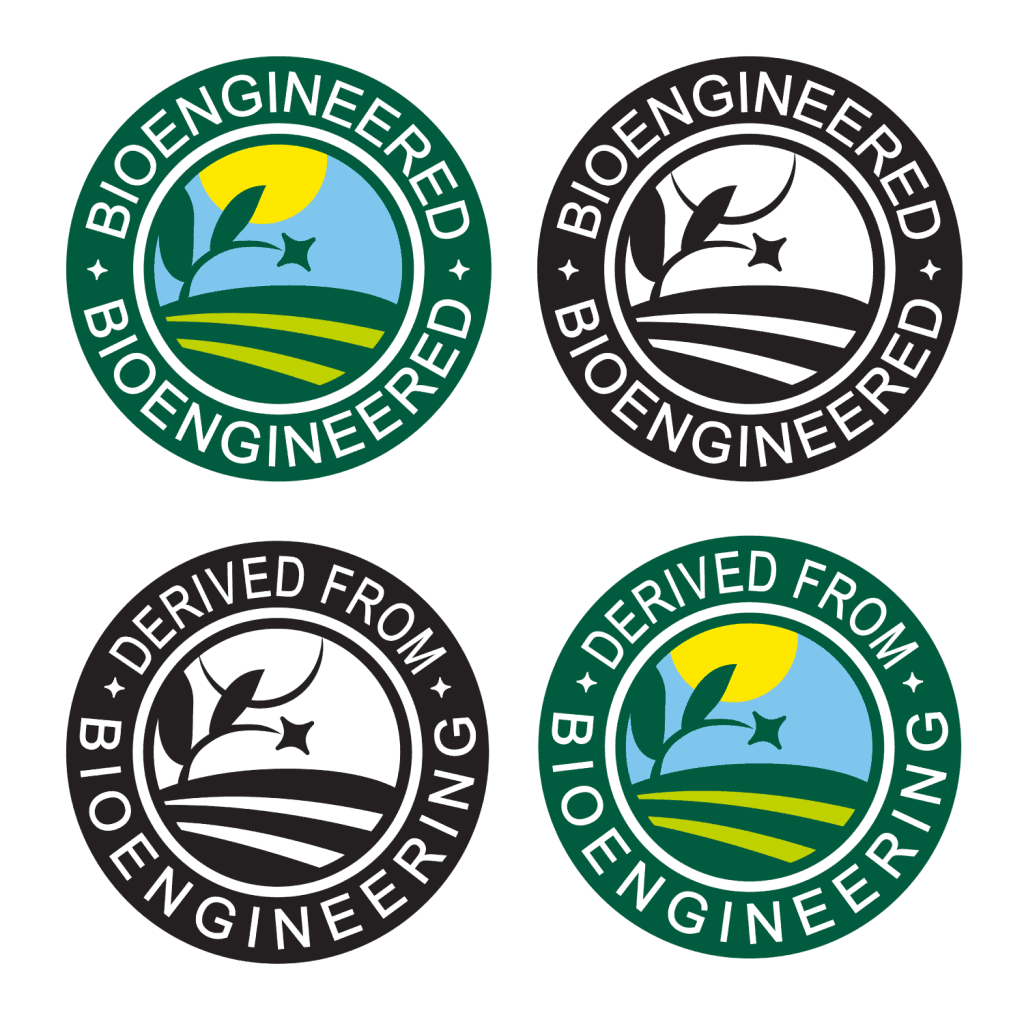
A recent federal appellate court ruling delivered a clear message: the USDA’s current GMO (Bioengineered/BE) labeling rule falls short of the law’s promise to consumers. The court found that the existing rule is inadequate and ordered the agency to go back and rewrite it—opening a critical window to demand honest, meaningful labeling that people can actually understand and use. This is a rare opportunity to push for true transparency in our food system and ensure the public’s right to know is finally respected.
The current rule has so many loopholes and exemptions that GMO/BE labels are like an endangered species. We spent an hour in a grocery store looking, and despite the fact that at least 70 – 80% of packaged foods on the shelves contain GMO/bioengineered ingredients, we couldn’t find a single on-package GMO/BE label.
The current law, passed in 2016 and signed into law by President Obama, was the fruit of tens of millions of lobbying dollars from Big Food and Big Ag, the companies that stand to lose the most when consumers know what they’re buying.
Background: Early Efforts and Sabotaged Attempts at GMO Labeling
- Efforts to require clear labeling of genetically modified foods in the U.S. date back decades. Oregon Ballot Measure 27 in 2002 attempted to require mandatory labeling of GMO-containing foods in that state — but it was rejected by voters after opponents spent $5.5 million lobbying against it. Monsanto Company (now owned by German Bayer), the agricultural company whose products accounted for 70% of the GMO market, contributed $1.5 million to the effort. Sadly, they were able to convince voters to vote against their own best interests by using fearmongering tactics, scaring consumers with false claims that food prices would rise significantly.
- In 2012, California GMO labeling initiative Proposition 37 likewise failed at the ballot box after Monsanto et al used the same tactics. Despite the absurd amount of money spent by corporations lobbying against it, $46 million, the measure failed by only a small margin.
- In 2013, both Connecticut and Maine passed GMO labeling laws with trigger clauses, meaning they’d activate once neighboring states enacted similar rules.
- In 2014, Vermont became the first state to pass a mandatory law requiring “Produced with Genetic Engineering” labels, with an effective date in 2016. But it was later preempted at the federal level by the DARK Act and never took effect.
- On the federal level, Public Law 114-216 was enacted in 2016 when President Obama signed Senate Bill 764 (S.764) — dubbed the “DARK Act” (Deny Americans the Right to Know) — overturning Vermont’s law and preventing future state-level GMO labeling that called for stricter rules. The federal standard, the National Bioengineered Food Disclosure Standard, was not finalized until 2018, and didn’t take effect until January 1, 2022.
The 2018 National Bioengineered Food Disclosure Standard and Why It Failed to Achieve Meaningful Transparency
- In 2016, Congress amended the USDA’s authority — via Public Law 114-216 — and directed the agency to create a national standard requiring disclosure when foods “are or may be bioengineered.”
- The USDA’s implementing regulation (finalized in 2018, and commonly referred to as the National Bioengineered Food Disclosure Standard, or “BE Rule”) went into effect on January 1, 2022.
- But from the start, the BE Rule contained major loopholes that gutted the potential for meaningful disclosure:
- It exempted many “highly refined” or ultraprocessed foods (e.g., refined oils, sugars, starches and other ingredients derived from GMO crops) if the genetic material was rendered “undetectable” in the finished product.
- It required disclosures to use the term “bioengineered” — a technical, less-familiar term — instead of more recognizable language like “GMO,” “genetically modified,” or “genetically engineered,” which critics argued would confuse consumers or obscure the fact that a product contains genetically modified ingredients.
- It allowed companies to satisfy disclosure requirements by simply providing a QR code or a website link — requiring consumers to scan or access the internet to learn whether the product contains bioengineered ingredients. Many saw this as deeply inadequate, since it places the burden on consumers and excludes those without smartphones or reliable internet access.
- It exempted many “highly refined” or ultraprocessed foods (e.g., refined oils, sugars, starches and other ingredients derived from GMO crops) if the genetic material was rendered “undetectable” in the finished product.
Because of these exemptions and technical loopholes, consumer advocacy groups argued that the law failed to deliver on its promise: most processed foods derived from GMO crops would not carry any clear, on-package label indicating their origin.
In short — the 2018 federal standard was deeply flawed from a transparency standpoint. It created a national labeling regime, but one so weak and narrow that, for many consumers and many products, it meant little or nothing had changed.
The 2025 Court Ruling: A Turning Point
On October 31, 2025, a three-judge panel of the United States Court of Appeals for the Ninth Circuit handed down a landmark decision in Natural Grocers v. Rollins (Case No. 22-16770), which significantly undermined key elements of the BE Rule — and opened the door to a true, more comprehensive mandatory GMO labeling scheme.
The court’s decision addressed three central issues:
- Exemption for “highly refined” foods: The Ninth Circuit found that the USDA committed a legal error when it excluded processed foods whose genetic material was “undetectable” from labeling requirements. The court held that “non-detectability” under the regulation cannot be equated with “non-presence.” In other words, even if modified genetic material is so processed that current tests cannot detect it, that does not mean it is not “contained” in the food — so the exemption was unlawful.
- Disclosure format (QR-codes / website links): The appellate court affirmed that the previous allowance for QR codes (or website links) alone is invalid because such methods do not guarantee meaningful access to GMO disclosure. The court directed that the lower court craft an appropriate prospective vacatur of those provisions.
- Terminology (“bioengineered” vs. “GMO”): The court did not force USDA to adopt the more familiar term “GMO” or “genetically modified.” It accepted that USDA acted within its discretion in requiring the uniform term “bioengineered.”
But by invalidating the “highly refined” exemption and the digital-only disclosure option, the ruling effectively dismantles the two biggest structural loopholes that rendered the 2022 labeling standard largely meaningless in practice. Many products derived from GMO crops — including common processed foods — may now soon require clear, on-package labeling. Advocates have described the ruling as “a crucial culmination of decades of effort” toward transparency.
Why the Ruling Creates a Real Opportunity for Meaningful Mandatory GMO Labeling
- Expands the scope of labeled foods: Foods that previously escaped labeling simply because they were refined or processed — like oils, syrups, sweeteners, starches and other common ingredients — now face the prospect of mandatory disclosure as “bioengineered” (or GMO). That dramatically expands the list of products subject to disclosure.
- Eliminates digital-only disclosure: By striking down QR codes (or website links) as sufficient disclosure, the court forced manufacturers to provide labeling in a way that consumers can see directly on the package — rather than requiring additional steps that many shoppers may not take or may not be able to take, and discriminates against consumers who do not have a smart phone or internet access.
- National standard can now function as true “right to know”: With loopholes removed, the national law finally has a chance to fulfill what many consumers and advocates sought for decades — a transparent, broadly applicable GMO labeling requirement that does not depend on voluntary disclosures, obscure terminology, or hidden digital disclosures.
- Leverage for further reforms and public pressure: Because the ruling remands the standard back to the USDA to rewrite the regulations, there is a meaningful window for public input, advocacy, and regulatory reform — potentially leading to stronger requirements than before.
In essence, the court has forced a re-evaluation of the rules — shifting the balance from industry-friendly loopholes toward consumer transparency.
Challenges Remain — What’s Not Yet Guaranteed
- The court did not require use of the term “GMO” over “bioengineered.” The more technical “bioengineered” remains legal under the law, which may still cause confusion for many consumers.
- The court stopped short of immediately invalidating the entire BE Rule. Instead, it remanded portions of the regulation and gave the agency the authority to adopt scientifically justified thresholds (for how much modified genetic material constitutes a “bioengineered” food) under a separate statutory provision. While the EU and other countries around the world require a label if as little as 0.9% of the ingredients are derived from genetic engineering, the court left it open for the USDA to set higher, industry friendly thresholds.
- There is no fixed deadline for when new regulations must be issued. The agency will need to engage in further rulemaking (including public comment), which could take time — or be delayed by political or administrative factors.
So while the ruling is a breakthrough, realizing “true mandatory labeling” will depend on implementation — and potentially on public pressure, advocacy, and regulatory follow-through.
Conclusion: A Long-Awaited Pivot — But Not the Final Finish Line
For decades, efforts to mandate GMO labeling in the United States faltered — through failed ballot initiatives, legislation like the DARK Act, and regulatory standards that created more loopholes than transparency. The 2018 BE Rule represented the first national labeling standard — but one deeply compromised in scope and effectiveness.
The 2025 decision by the Ninth Circuit in Natural Grocers v. Rollins marks a significant turning point. By invalidating the exemption for refined foods and rejecting digital-only disclosure, the court has opened the door to REAL, meaningful disclosure — the kind we, and the majority of consumers, have demanded for well over a decade.
But this is not the end. Now begins the crucial next phase: regulatory rewriting, public input, and likely political and industry pressure. For a true labeling regime to emerge — one that clearly informs shoppers about GMO ingredients across the food products on our grocery store shelves — vigilance and continued advocacy will be essential.
Given the powerful influence of corporate lobbying, there will be extreme pressure from Big Food and Big Ag for high tolerance thresholds resulting in weak and meaningless standards, and to once again kick the can down the road for years in the hope that no one will notice and public engagement will decline.
This ruling doesn’t guarantee the end of labeling fights, but the beginning of yet another battle for food transparency. We need to know what’s in our food so we have the freedom to choose how our food was produced and, if need be, we can track back and figure out if it’s making us sick. It’s a basic human right to know. We hope you’re up for the fight!

Need true labeling only.
I don’t want to eat foods that have been altered.
Corporations rule the labeling of the junk food they produce. Honesty does not earn them $$$.