


Tell your U.S. Senators to support S.2324, the Pesticide Injury Accountability Act, to amend FIFRA to create a federal right of action for anyone who is harmed by a toxic pesticide. Sign the petition HERE.
On April 1, 2026, U.S. Senator Cory Booker (D-NJ), 36 State Legislators, and 21 State Attorneys General filed briefs in support of John Durnell and against Monsanto, in Bayer-Monsanto’s appeal to the U.S. Supreme Court seeking immunity from pesticide-harm lawsuits.
In 2023, a Missouri jury awarded John Durnell—who developed non-Hodgkin lymphoma after using Roundup weedkiller—$1.25 million in damages, finding that the herbicide’s label did not adequately warn of cancer risks. Monsanto appealed, arguing that federal law (FIFRA) preempts state failure-to-warn.
As of today, approximately 170,000 people who developed cancer from Roundup use have sued Monsanto (now owned by Bayer), and Bayer is attempting to shut down these lawsuits and block any future claims from being brought. Bayer-Monsanto’s Roundup lawsuits have created massive financial liability, surpassing $16 billion in total settlements, provisions, and legal costs since 2020. As of April 2026, ongoing litigation includes roughly 65,000 active lawsuits.
If the High Court rules in favor of Monsanto, it would have far-reaching implications. Not only would it shield Bayer-Monsanto and its glyphosate-based herbicide Roundup from future health-harm lawsuits, but a favorable ruling for Monsanto would shield all pesticide manufacturers and all pesticide products from future lawsuits when the companies comply with weak and inadequate EPA pesticide labeling requirements.
Currently, China-owned Syngenta is also facing over 6,400 lawsuits from plaintiffs alleging the corporation’s paraquat-based herbicide Gramoxone caused their Parkinson’s disease.
In December 2025 and again in March 2026, President Trump’s Solicitor General filed briefs arguing that the Supreme Court should rule in favor of Monsanto. And on February 18, 2026, President Trump issued an Executive Order giving Bayer and glyphosate manufacturers legal immunity. Thankfully, a presidential executive order can be easily overturned by the next president.
Last July, Senator Cory Booker sponsored bill S.2324, the Pesticide Injury Accountability Act of 2025, which would ensure that pesticide manufacturers can be held responsible for the harm caused by their toxic products. The bill would amend the Federal Insecticide, Fungicide and Rodenticide Act of 1972 (FIFRA) to create a federal right of action for anyone who is harmed by a toxic pesticide.
On April 1, 2026, Senator Booker filed an amicus brief with the Supreme Court in support of cancer victims, urging the high court to “adhere to the settled principle that federal preemption of state law must rest on the intent of Congress as expressed in the text and structure of its enactments, not on the advocacy of regulated parties who have been unable to obtain their desired result from the legislature.” You can read the full brief HERE.
Also on April 1, New Mexico Attorney General Raúl Torrez, witha coalition of 17 other state AGs, filed an amicus brief in support of Durnell. The coalition includes Arizona, California, Colorado, Delaware, the District of Columbia, Illinois, Maine, Maryland, Massachusetts, Michigan, Minnesota, New Jersey, New Mexico, New York, Oregon, Rhode Island, Vermont, and Wisconsin. The brief states, “Private rights of action under state common law are a form of state police power to protect human and environmental health. Amici States have a strong interest in preserving their constitutional police power and ensuring that principles of federalism are adequately considered in preemption cases.” You can read the full brief HERE.
Texas AG Ken Paxton, joined by Florida and Ohio, also filed a brief supporting Durnell. The brief states, “Amici States take no position on the merits of the underlying claims, including whether exposure to glyphosate caused respondent’s cancer and whether the use of glyphosate-based pesticides is desirable as a matter of policy. Amici States write instead to emphasize that these decisions should be made under state law, not by a federal agency. State tort law is the traditional regulatory scheme for poisonous substances, and it serves vital compensatory and deterrent purposes.” You can read the full brief HERE.
Illinois AG Kwame Raoul said, “Limiting the ability of injured consumers to seek justice through the court system is un-American and only rewards large corporations for failing to warn the public about the potential dangers of their products. I will continue to advocate for the rights of consumers to pursue justice under the law.”
A coalition of 36 state legislators—Democrat, Republican, and Independent— from Georgia, Iowa, Maine, Maryland, Michigan, Minnesota, Missouri, Montana, Nebraska, New Mexico, North Carolina, Washington, and Wisconsin also filed a brief supporting Durnell. The brief states, “As state lawmakers, amici acutely understand—and have experienced—the benefits that flow from localized debate and decisionmaking. They correspondingly understand that their federal counterparts do not lightly—and should not be taken lightly—displace state law through preemption, much less make preemption depend on administrative agencies’ or executive officials’ decisions rather than statutory text. Although amici may disagree on some policy questions, all agree that state legislatures are best situated to consider the claims and remedies available to their citizens for any injuries arising from glyphosate.” You can read the brief HERE.
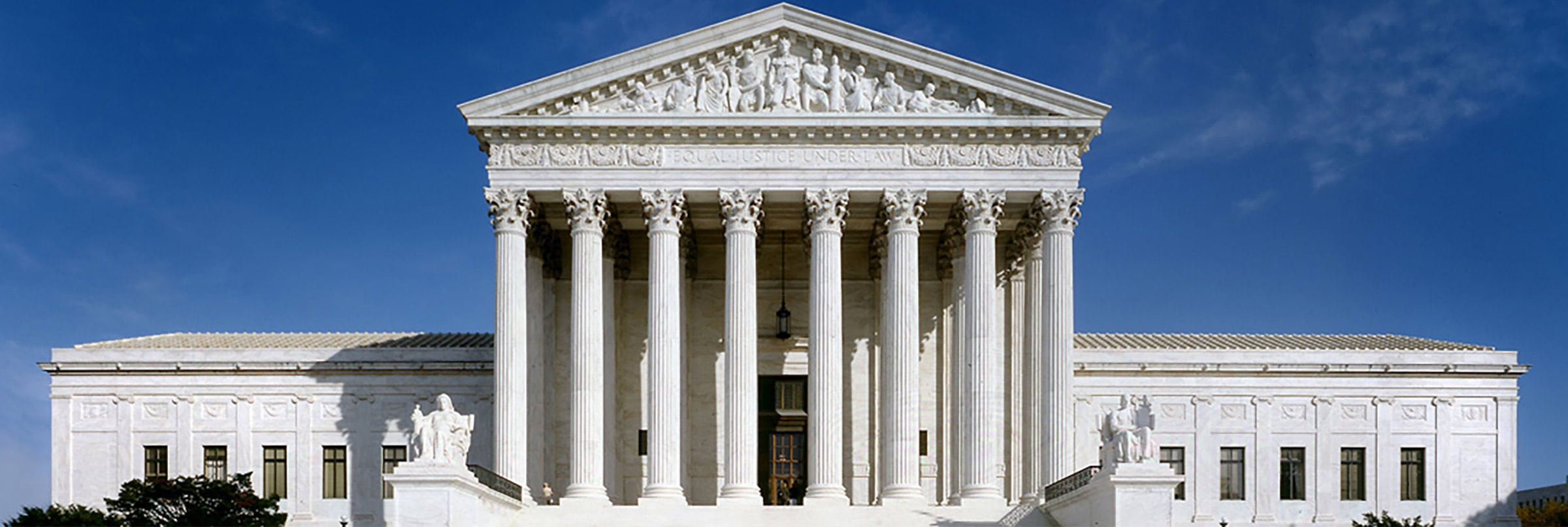
The Supreme Court will hear Monsanto Company v. John L. Durnell at the end of April.
At its core, this case is not just about one man, one product, or one company—it is about whether everyday people will retain the fundamental right to seek justice when they are harmed. John Durnell’s story represents thousands of families who trusted that the products they used were safe, only to face life-altering consequences. If the courts close their doors to these victims, it sends a chilling message: that corporate compliance with weak standards matters more than human lives.
As the Supreme Court prepares to hear this case, the stakes could not be higher. The outcome will shape the future of accountability in this country—determining whether powerful corporations can evade responsibility, or whether the voices of those harmed will still be heard. This is a moment that calls for vigilance, for advocacy, and for remembering that behind every lawsuit is a person, a family, and a fight for dignity that should never be denied.
Tell your U.S. Senators to support S.2324, the Pesticide Injury Accountability Act, to amend FIFRA to create a federal right of action for anyone who is harmed by a toxic pesticide. Sign the petition HERE.

My best friend died of lymphoma, the kind proven in a CA court case is caused by glyphosate. NO MORE EXEMPTIONS FOR COMPANIES THAT CREATE AND SELL TOXINS!
Other countries have followed the science and already banned may chemicals still in use in the USA. Don’t you need ALIVE people working to make the economy run? Don’t ALIVE people need clean water and healthy food and clean air to survive? WHY would you dump poisons on me and our children and then offer it to us to eat? STOP this madness.
Let’s stop poisoning our people!!